Forklift Facts vs. Fiction: 4 Common Myths Debunked
Some forklift myths are so common that people rarely stop to question whether they’re true.
A passing comment, an old piece of advice, or something heard years ago can quietly turn into “common knowledge”, even when it’s based on misunderstanding rather than fact.
The problem is that assumptions don't improve safety, ensure compliance, or reduce risk. In some cases, they can do exactly the opposite.
From public roads and seat belts to training costs and personal protective equipment, many commonly repeated forklift beliefs have little grounding in reality.
This article examines four common myths and compares them against the facts, helping separate workplace folklore from practical understanding.
Key Takeaways
- Some forklift myths are so common that they become accepted as fact.
- Workplace folklore and assumptions can create unnecessary safety and compliance risks.
- Road traffic laws may still apply when forklifts are operated on public roads.
- Seat belts and safety footwear remain important parts of operator protection.
- Effective forklift training supports safety, competence, and legal compliance.
- Better decisions are made when facts replace assumptions and misconceptions.
Separating Workplace Folklore from Reality
Not every forklift myth is completely invented. Many begin with a small piece of truth before being simplified, taken out of context, or repeated without much thought.
That’s what makes them so persistent.
The following myths are some of the most common examples encountered in workplaces today.
Understanding the facts behind them can help businesses make better decisions, avoid unnecessary risks, and challenge assumptions before they become accepted practice.
"Just because everyone says it doesn't make it true."
Myth 1: A Forklift Can Be Used on Public Roads for up to 1000 Yards Without Insurance or Road Tax
Fiction.
The so-called "1000-yard rule" is often misunderstood. The reference comes from the "Works Truck" taxation class. If the revenue weight of a forklift exceeds 3,500 kg, it may be registered as a works truck, provided it is used on public roads between premises in the immediate vicinity (approximately 1,000 yards).
However, this relates to vehicle taxation, not an exemption from road traffic law. Even where a works truck qualifies for this taxation class, it must still comply with requirements relating to registration, insurance, lighting, licensing, and roadworthiness.
Another common belief is that these rules only apply to traditional roads. In reality, areas with public access can fall within the scope of road traffic law even when they are privately owned.
The key point is that travelling a short distance does not remove legal obligations. Crossing a road or moving between nearby premises still requires compliance.
Bottom Line: Forklifts must comply with road traffic laws when operated on public roads, regardless of the distance travelled.
Myth 2: Seat Belts Are Optional on Forklift Trucks
Fiction.
Seat belts are one of the most important safety features on a counterbalance forklift. They help prevent operators from being thrown from the truck or crushed during an overturning incident - one of the most serious types of forklift accident.
Since 2002, new counterbalance forklifts with a capacity of up to 10 tonnes must be fitted with seat belts as standard. Employers must also ensure that restraint systems are used wherever there is a risk of overturning.
Not every type of forklift uses the same protection system. Reach trucks, order pickers, and certain specialist machines may rely on different forms of operator restraint depending on their design and intended use. However, on most counterbalance forklifts, seat belts remain a critical part of the safety system.
Ensuring seat belts are fitted is only part of the solution. Employers must ensure operators are trained to use them correctly and that safe practices are consistently followed.
Bottom Line: Seat belts save lives and form an essential part of the operator protection system on most counterbalance forklifts.

Myth 3: Forklift Training Is an Unnecessary Expense
Fiction.
Some businesses see forklift training as a cost that can be delayed, reduced, or avoided altogether. In reality, the consequences of inadequate training are often far more expensive than investing in proper instruction from the start.
Accidents can lead to damaged stock, equipment repairs, lost productivity, higher insurance premiums, legal action, and, most importantly, injuries to those involved. Even minor incidents can become costly very quickly.
Effective training helps operators work safely, confidently, and efficiently. It also helps employers meet their responsibilities while reducing the likelihood of avoidable mistakes and preventable incidents.
Training may look like an expense when viewed on its own. But compared with the potential cost of an accident, it is one of the most cost effective investments a business can make.
Bottom Line: Forklift training is an investment in safety, competence, and risk reduction, not simply another business expense.
Myth 4: Forklift Operators Don't Need Safety Footwear
Fiction.
Forklift operators may spend much of their time seated, but they still work in environments where foot injuries can occur. Protective footwear is designed to guard against a range of common workplace hazards both inside and outside the truck.
Loads can fall during handling operations, pallets can break, and operators often need to leave the truck to carry out checks, handle loads, or move around the workplace. In busy areas, there is also a risk of feet being struck, trapped, or run over by equipment.
Quality safety footwear protects against impact injuries, crushing hazards, punctures from sharp objects, and slips on contaminated surfaces. These risks are not unique to forklift operators, but they are common enough in many workplaces to justify mandatory protection.
Where there is a foreseeable risk of foot injury, employers must provide suitable personal protective equipment and ensure it is used correctly.
Bottom Line: Safety footwear is an important part of workplace protection and is required wherever there is a risk of foot injury.
Conclusion
Not everything you've heard about forklifts is true.
Many familiar workplace beliefs are rooted in outdated information, half remembered advice, or assumptions that were never accurate in the first place. By challenging these ideas and relying on factual guidance, businesses can make better decisions, improve safety, and avoid unnecessary risks.
When it comes to forklift operations, facts will always be more valuable than fiction.
Written by Clinton Mitchell, ITSSAR-Accredited Instructor
Last updated: June 2026
Frequently Asked Questions
Latest Articles
The articles linked below explore the individual laws, duties, and enforcement powers discussed throughout this guide in more detail.
-
Forklift Facts vs. Fiction: 4 Common Myths Debunked
Common forklift myths can lead to unsafe decisions and legal misunderstandings. Discover the facts behind four widely repeated assumptions.

Forklift Training That Stands Up to Scrutiny
Structured, workplace-based training designed around real operational conditions.

On-Site, Relevant Training
Delivered at your premises using your equipment and working environment, helping operators develop practical skills in real workplace conditions.

ITSSAR-Accredited Standards
Training delivered to recognised ITSSAR standards, helping employers maintain properly structured workplace training and clear operator records.

Clear, Practical Instruction
Focused on safe working practices, operator understanding, and practical workplace operation - not just passing a test or ticking boxes.
Trusted by Businesses Across Hampshire and the South

Practical side of training – using the forklift truck. Great instructions and atmosphere made me feel at ease.
RH, Fareham, Hampshire
Information and instructions were clear and bite-sized to easily comprehend and understand.
DG, Waterlooville, Hampshire
Want to see more? Check out our Google reviews.
Training Courses We Deliver
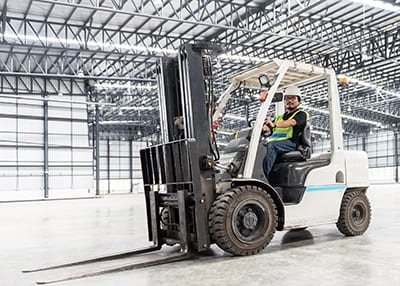
Counterbalance Forklift Training
Training for the most widely used forklift type, covering safe operation, pre-use inspections, load handling, and manoeuvring in real workplace conditions.
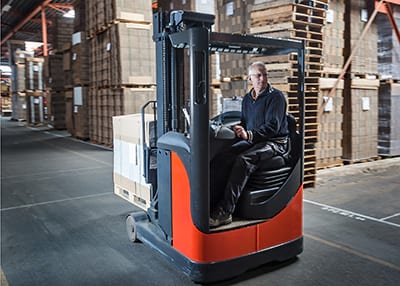
Reach Truck Training
Training focused on warehouse operations, including safe manoeuvring, pallet placement in racking, and working efficiently in narrow aisles.

Telehandler Training
Training for telehandlers used in construction and industrial settings, covering safe operation, load placement, stability, and working safely on uneven ground.
Looking for something else? View all our forklift training courses.
Training Built Around Real Workplace Operations
On-site forklift training delivered at your premises using your equipment and working environment - designed around real workplace operations, not just passing a test.
We focus on practical operator competence, safe working practices, and structured training that transfers directly into day-to-day workplace operations.