L117 - The Approved Code of Practice for Rider-Operated Lift Trucks
Most people first hear about L117 when a forklift course is booked and an instructor mentions “the ACOP”. Behind that brief reference sits one of the most influential documents shaping how rider-operated lift trucks are trained, supervised and used across Great Britain.
L117 is not legislation, and it is not simply guidance. It is an Approved Code of Practice, giving it a special legal status that sets it apart from ordinary HSE guidance. For employers, managers, supervisors and anyone responsible for lift truck operations, understanding that distinction matters.
L117 helps translate broad legal duties into practical expectations. It sets recognised standards for operator training and explains how competence, supervision, authorisation and workplace management fit together to support safe lift truck use.
This article explores what L117 is, why its status is important, and how its principles influence the way rider-operated lift trucks should be managed in the workplace.
Key Takeaways
- L117 is an Approved Code of Practice with special legal status.
- It is not legislation, but it carries significant legal weight.
- L117 covers far more than basic operator training.
- Operator development includes Basic, Specific Job and Familiarisation Training.
- A certificate alone does not demonstrate workplace competence.
- Employers remain responsible for competence, supervision and authorisation.
- Refresher training should be based on need, not a fixed interval.
Understanding the Role of L117
L117 sits between legal duties and workplace practice, helping employers understand what safe lift truck operation should look like day-to-day.
It explains how broad legal requirements translate into practical expectations, from operator training to supervision, authorisation and ongoing competence.
Not Law, But Not Just Guidance
One of the most common misunderstandings is that L117 must be either the law or simply guidance. Neither description is accurate.
Legislation creates legal duties. Guidance offers advice. An Approved Code of Practice occupies a different position.
Following an ACOP is not compulsory, but it carries legal weight. If an employer is prosecuted for a breach of health and safety law and relevant parts of an ACOP were not followed, they must show they complied with the law in another way.
That is why L117 matters. It provides a recognised standard against which important aspects of rider-operated lift truck training and safe use can be understood.
A Short History of L117
L117 has shaped the UK’s approach to lift truck safety for decades. Earlier editions focused mainly on operator training, establishing recognised standards for basic training.
The current edition, published in 2013, retained the ACOP text and added wider guidance previously found in HSG6. As a result, today’s L117 covers far more than the training course itself. It includes guidance on safe use, pedestrian protection, lift truck features, maintenance and thorough examination.
This broader scope reflects a simple truth. Safe lift truck operation has never depended on the operator alone. Training is part of a wider system of workplace management.
Who L117 Applies To
Although instructors often reference L117, its audience is much wider.
The HSE identifies employers, managers, supervisors, people in control of worksites and the self-employed. Anyone responsible for lift truck operations should understand the expectations behind it.
Operator training is only one part of L117. Employers must consider who operates lift trucks, whether they have received suitable training, how their competence is maintained and how operations are supervised day-to-day.
In practice, L117 is just as relevant to a warehouse manager planning shifts as it is to an instructor delivering a course.
What L117 Covers
L117 is best known for operator training, but the publication covers considerably more. Subjects include:
- Operator training and testing
- Specific Job and Familiarisation Training
- Monitoring and refresher training
- Authorisation and training records
- Safe use of lift trucks
- Protecting pedestrians
- Lift truck features
- Maintenance
- Thorough examination
Together, these subjects place operator training within the wider responsibilities involved in managing lift trucks safely.

More Than a Forklift Training Document
Many people encounter L117 through a training course, but its influence extends far beyond the classroom.
Training provides essential knowledge and skills, but employers must also consider what happens before and after that training. Operators need appropriate supervision. Their performance needs to be monitored. Standards must be maintained once they return to everyday workplace operations.
Safe lift truck operation depends not only on how an operator is trained, but also on how that operator, the equipment and the working environment are managed afterwards.
The Three Stages of Training
L117 makes clear that operator development does not end with basic training. It recognises three stages:
Basic Training
The fundamental skills and knowledge required to operate a lift truck safely.
Specific Job Training
Instruction tailored to the operator’s actual workplace, equipment and tasks.
Familiarisation Training
Supervised practice in the real working environment.
Together, these stages take an operator from initial instruction to safe, competent operation in their own workplace. Our guide to the 3 Stages of Forklift Training explores each stage in more detail.
Competence Is More Than a Certificate
A certificate of basic training provides useful evidence that training has taken place and that an appropriate level of operating ability has been demonstrated. It is not a universal licence to operate any lift truck in any workplace.
Employers must be satisfied that an operator is competent for the work they are expected to carry out. Once training is complete and competence has been confirmed, written authorisation should identify the types of truck the operator is permitted to use.
Training provides knowledge and skills. Familiarisation develops the ability to apply them. Monitoring helps maintain standards. Authorisation is an employer decision.
A certificate forms part of that process, not the whole of it.
"Competence has to survive contact with the real workplace."
Does L117 Require Refresher Training Every Three Years?
This is another area where L117 is often misunderstood.
There is no fixed legal interval requiring refresher training every three years. Employers may choose to operate a formal refresher programme at reasonable intervals, but the key principle is that refresher training should be driven by competence and risk, not by a date on a certificate.
Further training may be appropriate where an operator has developed unsafe practices, has been involved in an accident or near miss, has not used a lift truck for some time, uses one only occasionally, or where working practices or equipment have changed.
The purpose is to maintain competence.
From Training Course to Workplace Management
This is where the real significance of L117 becomes clear.
It is easy to view forklift safety through the training course alone. Choose a provider, train the operator, issue a certificate and return them to work.
L117 presents a broader picture. Training must be appropriate. Operators need workplace-specific instruction. Their performance must be monitored. Unsafe practices must be corrected. Employers must decide who is competent and who is authorised to operate particular equipment.
The workplace itself also matters. Pedestrians, operating areas, equipment condition, maintenance, supervision and systems of work all influence whether lift trucks can be used safely.
Competence has to survive contact with the real workplace.
Why L117 Still Matters
L117 remains one of the most important documents governing expectations around rider-operated lift trucks in Great Britain.
Its importance lies partly in its legal status, but also in what it represents. It connects legal duties with practical workplace expectations. It establishes recognised standards for operator training while making clear that safe lift truck operation depends on more than a certificate.
Understanding L117 is not about memorising a publication. It is about recognising what good lift truck training and management should look like in practice, and understanding the responsibilities that continue long after the training course has finished.
Written by Clinton Mitchell, ITSSAR-Accredited Instructor
Last updated: September 2026
Latest Articles
The articles linked below explore the individual laws, duties, and enforcement powers discussed throughout this guide in more detail.
-
PUWER – Understanding the Work Equipment Regulations
Discover what PUWER requires, how it applies to forklifts and other work equipment, and why suitability, maintenance, inspections, and training matter.
-
Health and Safety at Work Act 1974 – A Landmark in Workplace Safety
Learn how the Health and Safety at Work Act 1974 transformed workplace safety and shaped modern employer responsibilities in the UK.


Frequently Asked Questions
Forklift Training That Stands Up to Scrutiny
Structured, workplace-based training designed around real operational conditions.

On-Site, Relevant Training
Delivered at your premises using your equipment and working environment, helping operators develop practical skills in real workplace conditions.

ITSSAR-Accredited Standards
Training delivered to recognised ITSSAR standards, helping employers maintain properly structured workplace training and clear operator records.

Clear, Practical Instruction
Focused on safe working practices, operator understanding, and practical workplace operation - not just passing a test or ticking boxes.
Trusted by Businesses Across Hampshire and the South

The instructor was very good at listening to any input. Very clear instructions throughout.
RT, Southampton, Hampshire
I enjoyed learning a few new things about operating and maintaining the forklift.
ME, Bentley, Hampshire
Want to see more? Check out our Google reviews.
Training Courses We Deliver
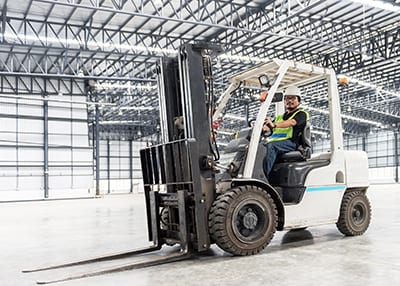
Counterbalance Forklift Training
Training for the most widely used forklift type, covering safe operation, pre-use inspections, load handling, and manoeuvring in real workplace conditions.
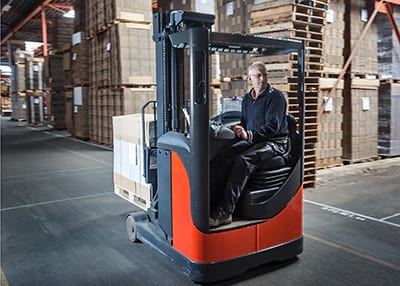
Reach Truck Training
Training focused on warehouse operations, including controlled manoeuvring, pallet placement in racking, and working safely in narrow aisles.

Telehandler Training
Training for telehandlers used in construction and industrial settings, covering safe operation, load placement, stability, and working safely on uneven ground.
Looking for something else? View all our forklift training courses.
Training Built Around Real Workplace Operations
On-site forklift training delivered at your premises using your equipment and working environment - designed around real workplace operations, not just passing a test.
We focus on practical operator competence, safe working practices, and structured training that transfers directly into day-to-day workplace operations.