
Health and Safety at Work Act 1974 – A Landmark in Workplace Safety
Workplace safety is so familiar that most people rarely stop to think about how it came to be.
Today, risk assessments, safety policies, training, inspections, employer responsibilities, and worker protections are so familiar that they are often taken for granted.
But these expectations did not always exist.
Before 1974, workplace safety laws were scattered across multiple pieces of legislation, each with different requirements and levels of protection. Different industries operated under different rules, enforcement was limited, and responsibility for preventing harm was not always clearly defined.
The Health and Safety at Work etc. Act 1974 changed all that.
More than just another piece of legislation, it transformed how workplace safety was understood and managed. It shifted the focus towards prevention, responsibility, and accountability, creating a framework that continues to influence safety standards across the UK today.
This guide explores why the Act was needed, how it changed safety management, and why it remains one of the most important pieces of workplace legislation ever introduced.
Key Takeaways
- Before 1974, workplace safety laws varied widely between industries.
- HASAWA introduced a more consistent approach to managing risk.
- The Act established clear responsibilities for employers and employees alike.
- Modern health and safety law is built upon its foundations.
- The Act helped transform safety standards across high-risk industries.
- Its influence can still be seen in how organisations manage risk and protect workers today.
The Foundation of Modern Workplace Safety
Modern health and safety standards did not appear overnight. Many of the responsibilities, protections, and expectations that now seem normal can be traced back to a single piece of legislation.
Understanding the Health and Safety at Work Act 1974 helps explain how Britain moved from a patchwork of rules to a system built around clear duties, proactive risk management, and shared responsibility.
The Need for the Act: Workplace Safety Before 1974
Before the Act, safety requirements varied widely between sectors. While legislation such as the Factories Act 1961 and the Offices, Shops and Railway Premises Act 1963 provided some protection, coverage varied considerably depending on where and how people worked.
As industry expanded and workplaces became more complex, the limitations of this approach became increasingly apparent. Similar hazards could be treated differently across sectors, standards were not always consistent, and employers were often left to navigate a confusing mix of requirements.
Safety was often treated as a compliance exercise, with accidents addressed after they occurred instead of being prevented in the first place.
The need for a more coherent framework was becoming impossible to ignore.
Notable Workplace Incidents Before 1974
Several major incidents highlighted the need for a more effective approach to safety management.
One such example was the Aberfan disaster of 1966, where a coal waste tip collapsed, killing 144 people, including 116 children. Although not a workplace accident in the traditional sense, it exposed serious shortcomings in regulatory oversight and the management of industrial risk.
Frequent accidents in factories, construction sites, and mines reinforced the same message. Serious incidents were occurring across a range of industries, raising growing concerns about whether existing arrangements were providing adequate protection for workers.
Alongside major incidents and increasing concern about workplace accidents, trade unions and worker representatives continued to campaign for stronger protections and clearer responsibilities. Pressure for reform was growing from multiple directions.
One of the most important catalysts for change was the Robens Report, published in 1972. Led by Lord Alfred Robens, the report concluded that existing safety laws were overly complex and focused too heavily on compliance and enforcement rather than prevention.
Instead, Robens proposed a system that placed greater emphasis on managing risk before incidents occurred. The report encouraged employers and workers to take a more active role in safety, supported by clearer duties, practical guidance, and a stronger focus on prevention.
How the Act Came into Being
The Health and Safety at Work Act 1974 was introduced by the UK government in response to growing concerns about workplace safety and the need for a more consistent approach across different industries.
Rather than creating an entirely new idea, the Act built upon the recommendations of the Robens Report. These recommendations called for a shift away from fragmented rules and reactive enforcement towards a system built around prevention and clearer duties. It placed greater emphasis on managing risk and sharing responsibility across organisations.
This represented a significant change in how health and safety was viewed. Employers, employees, and organisations were all expected to play a role in creating safer working environments, a principle that remains at the heart of health and safety management today.
Key Provisions of the Health and Safety at Work Act 1974
The Health and Safety at Work Act 1974 did more than consolidate existing rules. It established a framework of responsibilities designed to prevent harm, promote accountability, and improve safety standards across all industries.
Some of its most important provisions include:
1. General Duty of Employers: Employers must ensure, as far as reasonably practicable, the health, safety, and welfare of employees.
2. Duties of Employees: Workers are required to take reasonable care of their own health and safety and that of others affected by their actions.
3. Health and Safety Executive (HSE): The Act established the Health and Safety Executive (HSE), which enforces safety laws and provides guidance.
4. Managing Risk: Employers are expected to identify workplace hazards and take appropriate steps to control risks and protect those affected by their activities.
5. Workplace Safety Policies: Companies with five or more employees must have a written health and safety policy.
6. Enforcement and Penalties: The Act gives enforcing authorities the power to investigate breaches, issue enforcement notices, and prosecute those who fail to meet their legal duties.

Building on the Foundations of HASAWA
Since its introduction, the HASAWA has evolved through various updates and new regulations to address emerging workplace challenges. One key development came with the Management of Health and Safety at Work Regulations 1999, which reinforced the importance of risk assessments and introduced more rigorous safety management systems.
In 2007, the Corporate Manslaughter and Corporate Homicide Act was enacted, making it easier to hold companies criminally liable when gross negligence leads to a fatality. This was followed by the Health and Safety (Offences) Act 2008, which empowered courts to impose tougher penalties, including larger fines and potential prison sentences, for breaches of safety law.
While many additional regulations have been introduced since 1974, they are largely built upon the same principles that underpin HASAWA. The Act remains the foundation of modern workplace safety law, providing the framework on which much of today's health and safety legislation is based.
Impact on Different Sectors
The HASAWA has had a particularly profound impact on high-risk industries such as construction, manufacturing, and logistics. These sectors historically had some of the highest rates of workplace injuries and fatalities.
By establishing clearer responsibilities for employers and workers alike, the Act helped drive improvements in safety standards, risk management, training, and workplace conditions across a wide range of industries.
The Act also encouraged the development of industry-specific guidance, approved codes of practice, and more structured training standards - all of which helped raise competence levels across high-risk environments.
The Legacy of the HASAWA
The introduction of the HASAWA marked a turning point in worker protection. Since its enactment, workplace fatalities and injuries have decreased dramatically, and the UK is now considered one of the safest places in the world to work. More than fifty years later, the Act remains the cornerstone of health and safety law in the UK, shaping how organisations manage risk, protect workers, and fulfil their legal responsibilities.
"The Health and Safety at Work Act 1974 changed all that."
Conclusion
The Health and Safety at Work Act 1974 remains one of the most important pieces of legislation in UK history, ensuring that safety management is a priority rather than an afterthought. By understanding its origins, key provisions, and ongoing impact, businesses can continue to foster a culture of safety that benefits everyone.
The principles behind the Act remain as relevant today as they were in 1974. Decades after its introduction, organisations are still expected to identify risks, protect those affected by their activities, and create safer working environments.
The legislation may be decades old, but its impact is visible in workplaces across the UK every day.
Written by Clinton Mitchell, ITSSAR-Accredited Instructor
Last updated: June 2026
Latest Articles
The articles linked below explore the individual laws, duties, and enforcement powers discussed throughout this guide in more detail.
-
Health and Safety at Work Act 1974 – A Landmark in Workplace Safety
Learn how the Health and Safety at Work Act 1974 transformed workplace safety and shaped modern employer responsibilities in the UK.

Frequently Asked Questions
Forklift Training That Stands Up to Scrutiny
Structured, workplace-based training designed around real operational conditions.

On-Site, Relevant Training
Delivered at your premises using your equipment and working environment, helping operators develop practical skills in real workplace conditions.

ITSSAR-Accredited Standards
Training delivered to recognised ITSSAR standards, helping employers maintain properly structured workplace training and clear operator records.

Clear, Practical Instruction
Focused on safe working practices, operator understanding, and practical workplace operation - not just passing a test or ticking boxes.
Trusted by Businesses Across Hampshire and the South

The instructor was very good at listening to any input. Very clear instructions throughout.
RT, Southampton, Hampshire
I enjoyed learning a few new things about operating and maintaining the forklift.
ME, Bentley, Hampshire
Want to see more? Check out our Google reviews.
Training Courses We Deliver

Counterbalance Forklift Training
Training for the most widely used forklift type, covering safe operation, pre-use inspections, load handling, and manoeuvring in real workplace conditions.
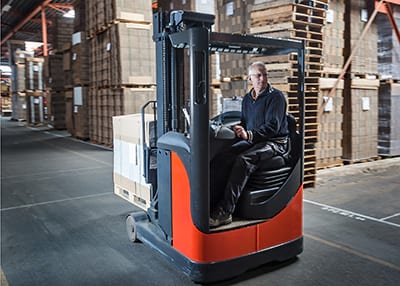
Reach Truck Training
Training focused on warehouse operations, including safe manoeuvring, pallet placement in racking, and working efficiently in narrow aisles.

Telehandler Training
Training for telehandlers used in construction and industrial settings, covering safe operation, load placement, stability, and working safely on uneven ground.
Looking for something else? View all our forklift training courses.
Training Built Around Real Workplace Operations
On-site forklift training delivered at your premises using your equipment and working environment - designed around real workplace operations, not just passing a test.
We focus on practical operator competence, safe working practices, and structured training that transfers directly into day-to-day workplace operations.