If There's an Accident, Who's Liable?
It’s one of the first questions that gets asked after something goes wrong.
A forklift tips. A load falls. Someone gets hurt. Operations stop, people start talking, and very quickly the focus shifts from what happened to who’s responsible.
Most businesses assume they already know the answer. Blame the operator. Blame the supervisor. Blame “human error” and move on.
That thinking is not just wrong, it’s exactly what gets companies into serious trouble.
Because in UK law, liability is rarely that simple. And when you look closely at how workplace accidents are investigated, a clear pattern emerges: responsibility almost always runs higher up the chain than people expect.
This section is designed to strip that back and show how liability really works in practice.
Key Takeaways
- Liability in forklift accidents usually extends beyond the operator and up through the organisation.
- Investigations focus on systems, controls, and decisions, not just individual actions.
- UK health and safety law places responsibility on those who create and manage risk.
- Paperwork only has value if it reflects what is actually happening on site.
- “Human error” is not accepted as a standalone defence when systems are weak.
- Directors and senior managers can be held personally accountable in serious cases.
Why Responsibility Rarely Stops with the Operator
Understanding liability starts with understanding how workplace accidents are investigated. The focus is rarely limited to the person closest to the incident. Investigators look at the systems, decisions, and controls that existed long before anything went wrong.
The Uncomfortable Truth About Workplace Accidents
When an incident happens involving a lift truck, it’s easy to focus on the moment itself. The turning point. The mistake. The action that triggered everything.
But regulators don’t look at it that way.
They work backwards.
They ask questions like:
- Why was that person in that position?
- What training had they received?
- What systems were in place?
- What supervision existed?
- What risk assessments had been carried out and were they any good?
In other words, they don’t just look at the operator. They look at the entire system that allowed that situation to exist in the first place.
And more often than not, that system is where the real failure sits.
The Law Doesn’t Care About Assumptions
A lot of employers operate on assumptions:
“We’ve always done it this way.”
“They’ve got a certificate.”
“They’re experienced.”
“It’s common sense.”
None of that carries much weight when something goes wrong.
UK health and safety law is structured around clear duties, not assumptions. The framework set out across legislation places responsibility firmly on those who create and control risk which, in most cases, is the employer.
That’s why this section covers the key pieces of legislation in detail. Not as a box-ticking exercise, but because they form the backbone of how liability is judged.
You’ll see how different regulations overlap, where duties sit, and why simply “having something in place” is not enough if it doesn’t stand up to scrutiny.
It’s Not Just One Law - It’s a System
One of the biggest misunderstandings in industry is thinking there’s a single rulebook.
There isn’t.
What actually exists is a layered system of legislation that works together. Each piece covers a different angle, and when an accident happens, they all come into play.
You’ve got overarching duties that set the tone for everything. Then you’ve got more specific regulations dealing with equipment, lifting operations, risk management, and inspection.
They don’t operate in isolation. They stack.
So, when something goes wrong, investigators don’t pick one, they look at all of them and build a picture of where failures occurred.
That’s why you’ll see articles in this section covering areas like equipment suitability, maintenance, lifting operations, risk assessment, and inspection regimes. Not because they’re separate issues, but because they all contribute to the same outcome. A good starting point is understanding the Health and Safety at Work etc. Act 1974, which underpins much of modern health and safety law.
"Liability follows control."
Paperwork Doesn’t Protect You, Evidence Does
A common mistake is believing that having documents in place is enough.
Risk assessments. Training records. Inspection logs. Policies.
They matter, but only if they reflect reality.
If a risk assessment says one thing and the workplace does another, the document becomes evidence against you, not in your favour.
If training has been “signed off” but operators clearly don’t understand basic safety principles, that raises bigger questions about competence, not smaller ones. This is where proper, structured forklift training becomes critical, not just attendance, but real understanding.
If inspections are recorded but defects are ignored, you’re not demonstrating control, you’re demonstrating knowledge of a problem you chose not to fix.
That’s the difference between paperwork and evidence.
And when liability is being decided that difference matters.
The HSE Isn't the Only Organisation Involved
Most people think of enforcement as starting and ending with the Health and Safety Executive.
They’re a major player, but they’re not the only one.
Depending on the situation, you could also be dealing with:
- Insurance investigators
- The police
- Local authorities
- Solicitors acting on behalf of injured parties
Each of them looks at the same incident from a slightly different angle, but they all ask similar questions about responsibility, control, and foreseeability.
And they all have access to the same underlying evidence.
This section will walk through what happens when those bodies get involved, what powers they have, and what you can realistically expect if your business is under scrutiny, including what to expect during an HSE visit and their powers when they arrive.
“Human Error” Is Not a Defence
It’s probably the most overused phrase in accident reporting.
“Human error.”
It sounds neat. It sounds reasonable. It sounds like an explanation.
But legally, it’s weak.
Because the obvious follow-up question is: why did human error lead to an incident in the first place?
Well-designed systems anticipate mistakes. They account for them. They put controls in place to reduce the likelihood and limit the consequences.
If a single mistake can lead directly to a serious accident, that’s not just human error, that’s a failure in the system around it.
And again, responsibility for that system usually sits with the employer.
Directors and Managers Are Not Shielded
Another common misconception is that liability stops at the company level.
It doesn’t always.
Where there is evidence of neglect, poor decision-making, or a clear failure to manage risk, individuals can and do get held accountable.
That can include directors and senior managers.
This isn’t about scaremongering; it’s about understanding how responsibility is assigned in real situations. If decisions made at the top contribute to unsafe conditions, those decisions don’t disappear just because there’s a company structure in place.
They become part of the investigation.
After the Incident: What Happens Next
Once an accident occurs, things move quickly.
Scenes are secured. Statements are taken. Documents are requested. In serious cases, operations may be halted.
At that point, it’s no longer about what should have been done, it’s about what can be proven.
This is where many businesses find themselves exposed. Not because they did nothing, but because what they did wasn’t consistent, wasn’t documented properly, or didn’t reflect what was actually happening on the ground.
Understanding how these investigations unfold and what investigators are really looking for can make a significant difference in how a situation develops.
Why This Section Matters
You don’t need to memorise legislation to run a safe operation.
But you do need to understand how responsibility works.
Because when things go wrong, the question isn’t just what happened, it’s who failed to prevent it.
And the answer to that question is rarely as simple as blaming the person closest to the incident.
The articles in this section are here to give you a clear, no-nonsense understanding of the legal landscape around forklift operations and workplace safety. Not in theory, but in a way that reflects how it’s applied.
The same principle runs through every article in this section:
Responsibility follows control.
If your business creates the risk, manages the environment, and sets the standards, then responsibility sits with you to make sure those things are right.
Everything else flows from that.
Written by Clinton Mitchell, ITSSAR-Accredited Instructor
Last updated: May 2026
Frequently Asked Questions
Latest Articles
The articles linked below explore the individual laws, duties, and enforcement powers discussed throughout this guide in more detail.
-
Health and Safety at Work Act 1974 – A Landmark in Workplace Safety
Learn how the Health and Safety at Work Act 1974 transformed workplace safety and shaped modern employer responsibilities in the UK.

Training Courses We Deliver
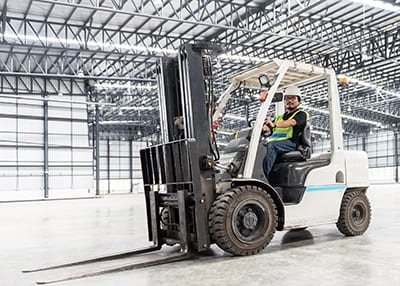
Counterbalance Forklift Training
Training for the most widely used forklift type, covering safe operation, pre-use inspections, load handling, and manoeuvring in real workplace conditions.
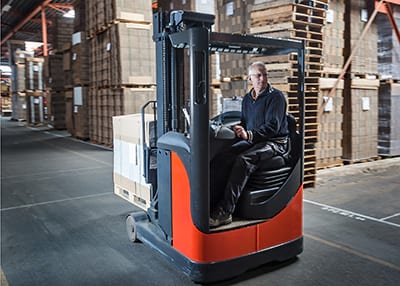
Reach Truck Training
Training focused on warehouse operations, including safe manoeuvring, pallet placement in racking, and working efficiently in narrow aisles.

Telehandler Training
Training for telehandlers used in construction and industrial settings, covering safe operation, load placement, stability, and working safely on uneven ground.
Looking for something else? View all our forklift training courses.
Forklift Training That Stands Up to Scrutiny
Structured, workplace-based training designed around real operational conditions.

On-Site, Relevant Training
Delivered at your premises using your equipment and working environment, helping operators develop practical skills in real workplace conditions.

ITSSAR-Accredited Standards
Training delivered to recognised ITSSAR standards, helping employers maintain properly structured workplace training and clear operator records.

Clear, Practical Instruction
Focused on safe working practices, operator understanding, and practical workplace operation - not just passing a test or ticking boxes.
Trusted by Businesses Across Hampshire and the South

It was great to learn how to drive the forklift safely. The theory lessons were interesting and engaging.
ST, East Worldham, Hampshire
Clear information given during the practical side. The questions at the end of each section helped.
TN, Segensworth, Hampshire
Want to see more? Check out our Google reviews.
Training Built Around Real Workplace Operations
On-site forklift training delivered at your premises using your equipment and working environment - designed around real workplace operations, not just passing a test.
We focus on practical operator competence, safe working practices, and structured training that transfers directly into day-to-day workplace operations.