PUWER - Understanding the Work Equipment Regulations
A forklift may be properly maintained, operated by a trained employee and used every day without anyone mentioning PUWER. Yet the regulations behind those arrangements are fundamental to how work equipment should be managed.
The Provision and Use of Work Equipment Regulations 1998, commonly known as PUWER, establish legal requirements for the equipment people use at work. They apply to far more than forklifts, covering everything from simple hand tools to complex industrial machinery.
PUWER places responsibilities on employers and others who control work equipment. These responsibilities extend beyond providing a machine that works. Equipment must be suitable for its intended purpose, maintained in a safe condition and used by people who have received appropriate information, instruction and training.
This article looks at the main requirements of PUWER, how they apply to forklifts and other work equipment, and what they mean for employers in practice.
Key Takeaways
- PUWER stands for the Provision and Use of Work Equipment Regulations 1998 and is enforceable.
- PUWER covers a wide range of work equipment, not just forklifts and industrial machinery.
- L22, Safe use of work equipment, contains the regulations, an ACOP and supporting guidance.
- Employers must ensure equipment is suitable for its intended use and safely maintained.
- Inspections are required in specified circumstances, depending on equipment and risks.
- People who use, supervise or manage work equipment must receive adequate safety training.
- PUWER responsibilities continue throughout the equipment's working life, not just when first introduced.
Understanding the Role of PUWER
PUWER provides a legal framework for managing work equipment safely, connecting the condition of machinery with the people, tasks and working arrangements involved in its everyday use.
Its requirements apply whenever equipment is selected, operated, inspected or maintained, helping employers recognise that safe use depends on arrangements that remain effective over time.
What Is PUWER?
PUWER is a set of regulations governing the provision and use of work equipment. Introduced in 1998, the regulations apply to machinery, appliances, apparatus, tools and installations used across a wide range of workplaces.
A counterbalance forklift is work equipment, but so is a pallet truck, a powered drill or a piece of production machinery. The complexity and risks may differ considerably, but the underlying principle remains the same. Equipment provided for work must be appropriate for its intended use and managed so that it can be used safely.
PUWER is concerned not only with the condition of work equipment, but also with how it is provided and used. It addresses suitability, maintenance, inspection, information, instruction, training and measures to protect people from equipment-related risks.
PUWER Legislation and the Approved Code of Practice
One aspect of PUWER that can cause confusion is the relationship between the regulations and the Approved Code of Practice that supports them.
PUWER is legislation. Its requirements are legally enforceable and establish duties that employers and other responsible parties must meet.
The Health and Safety Executive publishes L22, an Approved Code of Practice and guidance supporting PUWER. Its main title is Safe use of work equipment, followed by the description Provision and Use of Work Equipment Regulations 1998. Approved Code of Practice and guidance.
L22 brings together the regulations, the Approved Code of Practice and additional guidance. These elements are closely connected, but they do not have the same legal status.
The regulations establish the legal duties, while the ACOP provides practical advice on how to comply and carries a special legal status. Following an ACOP is not compulsory, but where relevant provisions have not been followed, a dutyholder prosecuted for a breach of health and safety law may need to demonstrate that the law was complied with in another way.
The accompanying guidance offers further explanation on understanding and applying the requirements.
L22 is not the only ACOP relevant to work equipment. L117, which addresses rider-operated lift trucks, also supports the application of PUWER in the more specific context of lift truck operations.
Who Does PUWER Apply To?
PUWER places duties on employers whose employees use work equipment. It also applies to others who have control over work equipment or its use, whether or not they own it.
This distinction is particularly important where equipment is hired, leased or supplied by another business.
For example, hiring a forklift does not remove an employer's responsibility for ensuring that it is appropriate for the work, safe to use and operated by suitably trained people. The precise responsibilities will depend on the circumstances and the degree of control each party has over the equipment and its use.
PUWER can also apply to self-employed people, although the extent of their duties depends on the circumstances.
Equipment Must Be Suitable for Its Intended Use
Choosing work equipment involves more than finding something capable of completing a task.
Under PUWER, equipment must be suitable for the purpose for which it is used or provided. Employers must consider the working conditions and the health and safety risks associated with its intended use.
A forklift may have sufficient lifting capacity for a particular load but still be unsuitable for the environment in which it will operate. Available space, ground conditions, load characteristics and the nature of the task can all affect that decision.
Suitability also matters when equipment is moved between locations or assigned to different work. A machine that performs safely in one environment may present different risks when introduced into another.
Employers therefore need to consider those differences rather than assume that previous safe use means the equipment is appropriate for its new environment.
"Providing suitable equipment is only the beginning. Keeping it safe is an ongoing responsibility."
Maintenance and Equipment Condition
Work equipment must be maintained in an efficient state, in efficient working order and in good repair. These are the terms used in Regulation 5 of PUWER.
This is a continuing requirement. Equipment that was safe when purchased or first installed may become unsafe through wear, damage, deterioration or inadequate maintenance.
For a forklift, maintenance may involve attention to braking systems, steering, tyres, hydraulics and other components that affect safe operation. The maintenance required will depend on the equipment, its use and the manufacturer's recommendations.
Employers need effective procedures for identifying defects, arranging repairs and preventing unsafe equipment from continuing in use.
Maintenance itself must also be carried out safely. Those undertaking the work need the necessary competence, information and instruction, particularly where repairs or adjustments expose them to additional hazards.
Maintenance records can also form part of these procedures. Where a maintenance log exists, PUWER requires it to be kept up to date, although the regulations do not require every item of work equipment to have one.
The objective is to keep equipment in a safe condition throughout its working life, rather than relying on repairs only after something has failed.
Inspections and Pre-Use Checks
Maintenance and inspection are closely related, but they serve different purposes.
Maintenance involves preserving the condition of equipment or restoring it when defects arise. Inspection involves examining equipment to determine whether it remains safe for use.
PUWER Regulation 6 requires inspections in specified circumstances. These include situations where safety depends on installation conditions, where equipment is exposed to deterioration that could create danger, or where exceptional circumstances may have affected its safety.
The type and frequency of inspection depend on the equipment, how it is used and the risks involved. PUWER does not establish one universal inspection interval for all work equipment.
Inspections required under Regulation 6 must be carried out by someone with sufficient knowledge and experience to undertake them competently. Their results must be recorded and retained until the next inspection is recorded. Where equipment moves between businesses, evidence of the last required inspection must also accompany it.
For forklifts, routine pre-use checks provide an important opportunity to identify visible problems before the truck enters service, such as damaged forks, hydraulic leaks or faults affecting safety devices.

Any defects identified should be reported and assessed. Equipment with defects that could affect safe operation must not be used until the risks have been adequately addressed.
Pre-use checks are valuable, but they do not automatically replace the more detailed inspections required under PUWER or other applicable legislation. Employers must determine what checks and inspections are required for each type of equipment rather than assume that one form of checking satisfies every requirement.
Training, Information and Competence
PUWER Regulation 8 requires adequate health and safety information and, where appropriate, written instructions to be available to people who use work equipment and employees who supervise or manage its use. This includes the conditions and methods of use, foreseeable abnormal situations and the action to take, and relevant lessons from experience. Information and instructions must be readily comprehensible to those concerned.
Training is addressed separately under Regulation 9, which requires employers to ensure that people who use work equipment receive adequate training for health and safety purposes.
That training must address the methods of using the equipment, the risks involved and the precautions needed to control those risks. People who supervise or manage the use of work equipment must also receive adequate training relevant to their responsibilities.
The amount and type of training required will depend on the equipment, the work being undertaken and the knowledge and experience of the people involved. Using a simple hand tool does not necessarily require the same level of training as operating a forklift or complex industrial machinery.
For lift trucks, operator training provides the foundation, but employers must also consider whether an individual can use the particular equipment safely in their working environment. Further instruction may be needed for unfamiliar equipment, site conditions or specific tasks.
Competence should therefore be considered in relation to both the person and the work they are expected to undertake, rather than relying solely on evidence that a training course has been completed.
Safe Use and Protective Measures
PUWER does not deal only with the condition of equipment. It also addresses safeguards intended to prevent people being exposed to danger while equipment is being used.
Depending on the equipment and risks involved, this can include guarding dangerous parts, appropriate controls, stability, lighting, warnings and measures to prevent unintended operation. PUWER also contains specific provisions for mobile work equipment.
Where work equipment presents specific risks, Regulation 7 also requires restrictions on who may use it and who may carry out certain maintenance or repair activities.
For forklifts, relevant considerations can include stability, visibility, braking systems, operating controls and protection against overturning risks. The measures required will depend on the truck, how it is used and the risks involved.
Providing appropriate equipment is therefore only part of the responsibility. Any protective measures needed for its safe operation must also remain effective.
PUWER and LOLER: Understanding the Difference
PUWER is sometimes confused with the Lifting Operations and Lifting Equipment Regulations 1998, commonly known as LOLER.
Both can apply to the same equipment, but they address different aspects of workplace safety.
PUWER establishes general requirements for work equipment, including suitability, maintenance, inspection, training and safe use.
LOLER introduces additional requirements relating to lifting equipment and lifting operations, including planning, supervision and thorough examination where applicable.
A forklift can therefore fall under both sets of regulations. PUWER applies to the truck as work equipment, while LOLER applies to relevant lifting functions and associated requirements.
The two sets of regulations work alongside one another. Compliance with one does not automatically remove obligations under the other.
PUWER Responsibilities Do Not End After Purchase
One of the most useful ways to understand PUWER is to consider the working life of a piece of equipment.
When a forklift is introduced into a workplace, its suitability must be considered. The people expected to use it need appropriate training and information. The equipment must be maintained, and appropriate inspection arrangements must be established.
The truck may later be moved to another operating area, assigned different tasks or used by employees with different levels of experience. Its condition may deteriorate, or changes to the workplace may introduce new risks.
These developments can affect whether the original arrangements remain adequate.
Employers therefore need to treat equipment safety as an ongoing responsibility. Purchasing suitable equipment, arranging initial training and establishing maintenance and inspection procedures are important steps, but these arrangements must remain effective as circumstances change.
Why PUWER Matters in the Workplace
PUWER brings many of the responsibilities surrounding work equipment under one legal framework. Choosing the right equipment is only the beginning. Its condition, use, inspection, maintenance and the competence of those working with it all matter.
For businesses operating forklifts, these requirements influence everyday decisions about equipment condition, operator training, inspections and safe working arrangements.
Understanding PUWER therefore means looking beyond the machine itself. It means considering how equipment is selected, used and managed throughout its working life.
Written by Clinton Mitchell, ITSSAR-Accredited Instructor
Last updated: October 2026
Latest Articles
The articles linked below explore the individual laws, duties, and enforcement powers discussed throughout this guide in more detail.
-
L117 – The Approved Code of Practice for Rider-Operated Lift Trucks
Discover what L117 is, why it has a special legal status, and how it shapes forklift training, competence, supervision, and workplace management.
-
Health and Safety at Work Act 1974 – A Landmark in Workplace Safety
Learn how the Health and Safety at Work Act 1974 transformed workplace safety and shaped modern employer responsibilities in the UK.


Frequently Asked Questions
Forklift Training That Stands Up to Scrutiny
Structured, workplace-based training designed around real operational conditions.

On-Site, Relevant Training
Delivered at your premises using your equipment and working environment, helping operators develop practical skills in real workplace conditions.

ITSSAR-Accredited Standards
Training delivered to recognised ITSSAR standards, helping employers maintain properly structured workplace training and clear operator records.

Clear, Practical Instruction
Focused on safe working practices, operator understanding, and practical workplace operation - not just passing a test or ticking boxes.
Trusted by Businesses Across Hampshire and the South

Very informative, made me feel at ease.
AC, Southampton, Hampshire
Clear and easy to follow instructions.
NO, Bordon, Hampshire
Want to see more? Check out our Google reviews.
Training Courses We Deliver
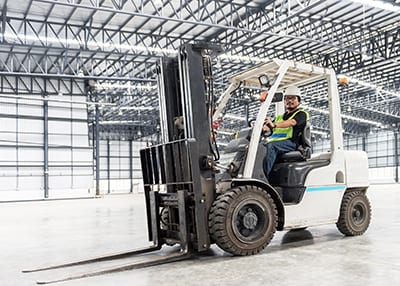
Counterbalance Forklift Training
Training for the most widely used forklift type, covering safe operation, pre-use inspections, load handling, and manoeuvring in real workplace conditions.
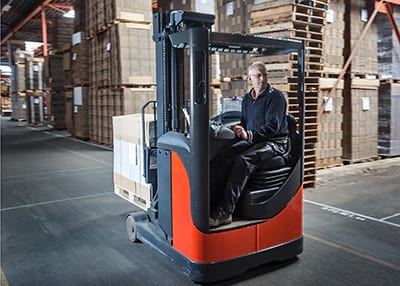
Reach Truck Training
Training focused on warehouse operations, including controlled manoeuvring, pallet placement in racking, and working safely in narrow aisles.

Telehandler Training
Training for telehandlers used in construction and industrial settings, covering safe operation, load placement, stability, and working safely on uneven ground.
Looking for something else? View all our forklift training courses.
Training Built Around Real Workplace Operations
On-site forklift training delivered at your premises using your equipment and working environment - designed around real workplace operations, not just passing a test.
We focus on practical operator competence, safe working practices, and structured training that transfers directly into day-to-day workplace operations.