Novice Forklift Operator Training
Home / Training Levels / Novice Operator Training
Structured Training for New Operators
Your First Step Towards Safe, Confident Operation
If you’re starting from scratch and need operators trained properly from the beginning, novice forklift training provides the foundation for safe, competent workplace operation. Delivered on-site across Hampshire and surrounding areas, this ITSSAR-accredited course is carried out in small groups with a maximum of three trainees, allowing each operator the time, attention, and practical instruction needed to develop safely and confidently.


Who Is This Course For?
Choosing the Correct Level of Training
This course is designed for operators with little or no previous forklift experience. Whether someone has never operated a lift truck before or has only informal experience without recognised training, novice training provides a structured route towards safe, competent workplace operation.
Course Duration
Giving Operators Time to Learn Properly
Depending on the truck type and number of trainees, novice forklift training typically ranges between 6 and 37.5 hours. This allows time to properly develop both practical operating skills and theoretical understanding, ensuring operators are trained, assessed, and not rushed through the learning process.

Forklift Types Available for Novice Training
Novice operator training is available across a wide range of workplace equipment, including:
- Counterbalance Forklift Training
- Reach Truck Training
- Telehandler Training
- Powered Pallet Truck (Pedestrian) Training
- Powered Pallet Truck (Rider) Training
- Pallet Stacker Training
- Straddle Truck Training
- Very Narrow Aisle (VNA) Training
- Low-Level Order Picker Training
- Medium-Level Order Picker Training
- High-Level Order Picker Training

Training availability depends on the equipment, facilities, and working environment available on-site.
From No Experience to Safe, Competent Operation
This course takes operators with little or no experience and develops the practical skills, understanding, and confidence needed for safe workplace operation. Through structured instruction and assessment, operators learn how to operate equipment safely, work efficiently, and build safe working habits that transfer directly into the workplace.
Key Information About Novice Forklift Training
Everything you need to know before booking a novice forklift training course for your operators.
Do You Need a Driving Licence?
A car driving licence is not required to operate a forklift truck unless the vehicle is used on public roads. However, basic driving experience can help with control and spatial awareness. Novice training is designed for complete beginners and requires no previous forklift experience.


Why Accredited Training Matters
This course follows the Health and Safety Executive’s Approved Code of Practice and Guidance (L117) for rider‑operated lift trucks, helping ensure training is structured in line with recognised UK standards. For employers, accredited training provides clear evidence that operators have received properly structured instruction and assessment.
Assessment and Certification
Each trainee must complete both a theory test and practical assessment. Successful candidates receive an ITSSAR-accredited certificate, with qualifications recorded on the TOPS register where applicable. Certification can also be issued under your company name while still meeting recognised training standards.


Where Training Takes Place
Training is delivered on-site at your premises using your equipment and working environment. This helps ensure operators develop practical skills in conditions that reflect their normal day-to-day workplace activities.
Forklift Training That Stands Up to Scrutiny
Structured, workplace-based training designed around real operational conditions.

On-Site, Relevant Training
Delivered at your premises using your equipment, so operators are trained in conditions that reflect your actual workplace.

ITSSAR-Accredited Standards
Structured training with the documentation, assessment, and professional standards employers should expect.

Clear, Practical Instruction
No jargon or shortcuts - operators gain a genuine understanding of safe working practices, not just how to pass a test.

Straightforward and Reliable Service
Straightforward booking, clear communication, and certification and paperwork completed promptly with no hidden extras.
Trusted by Businesses Across Hampshire and the South

The instructor explained everything clearly – the course has given me confidence.
AS, Portsmouth, Hampshire
We started at a basic level and built on it just like all good courses. An enjoyable few days.
JT, Chichester, West Sussex
The encouragement the trainer gave us at each stage was a great help. Very pleased with the result.
DJ, Fareham, Hampshire
Want to see more? Check out our Google reviews.
Novice Course Breakdown
A typical novice forklift training course takes complete beginners through structured theory and practical instruction designed to develop safe, competent operators. Training typically includes:
- Course induction
- The need and reasons for training
- Statutory requirements (HASAWA, MHSWA, PUWER, and LOLER etc.)
- Introduction to equipment / control familiarisation / principles of operation
- Identification / use / adjustment of attachments in pre-determined positions including forks
- Recommended mount and dismount
- Introduction to motive, steering controls and practice
- Basic steering exercises – simple courses
- Advanced steering exercises – figure‑of‑eight / chicane / 90° approaches
- Battery recharging procedures / maintenance
- Operator safety code and relevant handout
- Daily pre-use inspections / refuelling procedures
- Engineering principles / rated capacity / stability
- Simple hydraulics (theory)
- Introduction to hydraulic controls, handling empty pallets low‑level
- Load types / handling and weight assessment
- Stacking / destacking at low, medium and high levels on industrial racking*
- Stacking / destacking at low, medium and high levels bulk stacks*
- Stacking / destacking at low, medium and high levels cup‑post pallets*
- Manoeuvring with loads / ramps and inclines / handling awkward loads*
- Relevant safety film
- Vehicle loading and unloading (theory)*
- Vehicle loading and unloading (practical)*
- Multi-choice theory test
- Pre-use inspection test
- Practical skills test
* Topics are covered where relevant to your operation, the truck types involved, and where site facilities allow.
Not sure if novice training is the right fit? Here’s how the different training levels compare:
Forklift Training Levels Explained
All courses follow recognised ITSSAR standards and are delivered in line with current HSE guidance.

Novice Operator Training

Experienced Operator Training

Safety Refresher Training

Conversion Training
For a more detailed breakdown of each training level, view our forklift training levels guide.
Related Forklift Training Courses
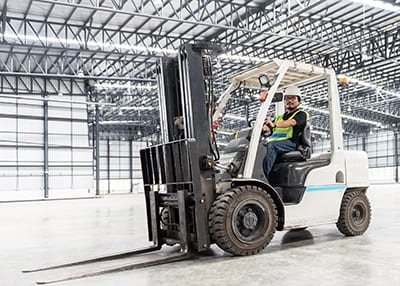
Counterbalance Forklift Training
Training for the most widely used forklift type, covering safe operation, pre-use inspections, load handling, and manoeuvring in real workplace conditions.

Telehandler Training
Training for telehandlers used in construction and industrial settings, covering safe operation, load placement, stability, and working safely on uneven ground.
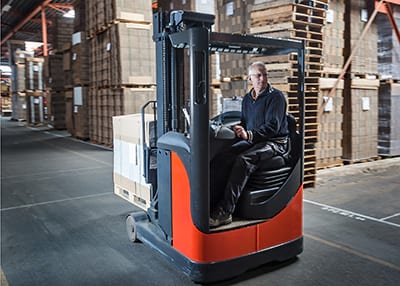
Reach Truck Training
Training focused on warehouse operations, including safe manoeuvring, pallet placement in racking, and working efficiently in narrow aisles.
Looking for something else? View all our forklift training courses.
Quick Answers to Common Questions
Ready to Arrange Novice Forklift Training?
Tell us about your operators, equipment, and workplace requirements, and we’ll confirm the most suitable training course and provide a clear, no-obligation quote.
Training is delivered on-site at your premises using your equipment and working environment, helping new operators develop safe, practical skills that transfer directly into the workplace.